
EasyStart Devices for A/C Compressors. Do They Save Energy?
Understanding What This type of device really does and If It Can Affect Your Compressor.
by Atomica Electrical Solutions, LLC
Many homeowners are installing devices such as “soft-start” modules on their air-conditioning compressors, hoping to reduce their electric bill.
But is that true? Does this device actually save energy or is it just improving the way your compressor starts?
What Does a Soft-Start Device Actually Do?
A soft-start device doesn’t make your air conditioner more efficient.
Its true purpose is to reduce the electrical surge that happens when your compressor starts.
When a compressor starts, it draws a short but intense spike of current — often 5 to 7 times higher than its normal running current.
For example, a 3-ton A/C unit that normally runs at 18 amps can momentarily pull 100 amps when starting.
That surge can:
Cause lights to flicker,
Stress electrical components,
Trip breakers,
The type of devices like soft-start module uses a small electronic controller to ramp up the voltage gradually during startup.
Instead of sending full power instantly, it applies it smoothly — so the compressor motor accelerates gently to full speed.
Once the motor is running, the device disconnects itself electronically. It doesn’t affect how the compressor runs after startup.
In simple terms:
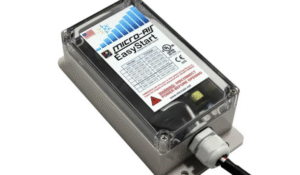
The EasyStart controls and reduces the startup current, protecting your electrical system and helping the compressor start smoothly.
Does It Really Save Energy?
Not significantly.
The startup period of an air-conditioning compressor lasts only a fraction of a second. Most of your power consumption happens while the unit is running.
Let’s look at a 3-ton A/C compressor in a typical 3/2 single-family home:
Locked Rotor Amps (LRA): ≈ 100 A at 240 V
Running Load Amps (RLA): ≈ 18 A
During a 4-hour run, the unit might consume about 17 kWh.
The startup surge adds only a small amount of energy — less than 5% of total usage.
Even if EasyStart reduces that surge by 70%, your monthly energy savings will be very small.
Real benefits: smoother starts, reduced mechanical and electrical stress, longer equipment life, and better performance with generators or limited power systems.
Myth: noticeable reduction on your electric bill.
How Does It Affect the Compressor?
Some people worry that reducing the starting current might harm the compressor because it’s “designed” to start with a high current.
That’s a good question — and the answer depends on the device design.
With Micro-Air’s EasyStart, the compressor is safe because the device uses adaptive learning technology:
It “learns” your compressor’s startup pattern during the first five cycles,
Then it automatically applies the correct voltage ramp for that specific motor.
It monitors voltage and current to prevent stalls or overheating.
It also includes built-in protection against rapid restarts and voltage faults.
That means the compressor still gets the torque it needs, but in a smoother and more controlled way.
A properly installed EasyStart device will not damage your compressor — it can actually help extend its lifespan by reducing mechanical shock and heat during each start.
⚠️ What If It’s Installed Incorrectly?
Improper installation or using the wrong model can cause:
Startup failures
Overheating
Breaker trips
Compressor damage.
That’s why this product should always be installed by a licensed electrician or HVAC technician who can verify correct wiring, phase, and protection.
Example: Typical 3-Ton A/C in a 3/2 Home
| Condition | Startup Current | Result |
|---|---|---|
| Without EasyStart | 100 A | Lights flicker, louder start, more stress |
| With EasyStart | 30 A | Quiet, smooth start, stable voltage |
Energy used per cycle: nearly identical.
Comfort and equipment protection: significantly improved.
Final Thoughts from Atomica Electrical Solutions
The EasyStart device is a smart upgrade for certain applications — especially:
Homes using generators or solar backup,
Locations with voltage drops or weak service,
Systems that show light flicker or rough starts.
But it’s not a “magic energy saver.”
The real value is in protection, performance, and reliability, not in large electric-bill reductions.
When you choose to install one, make sure it’s done by a qualified electrician who can test your compressor’s load, LRA, and running amps to ensure safe operation.